


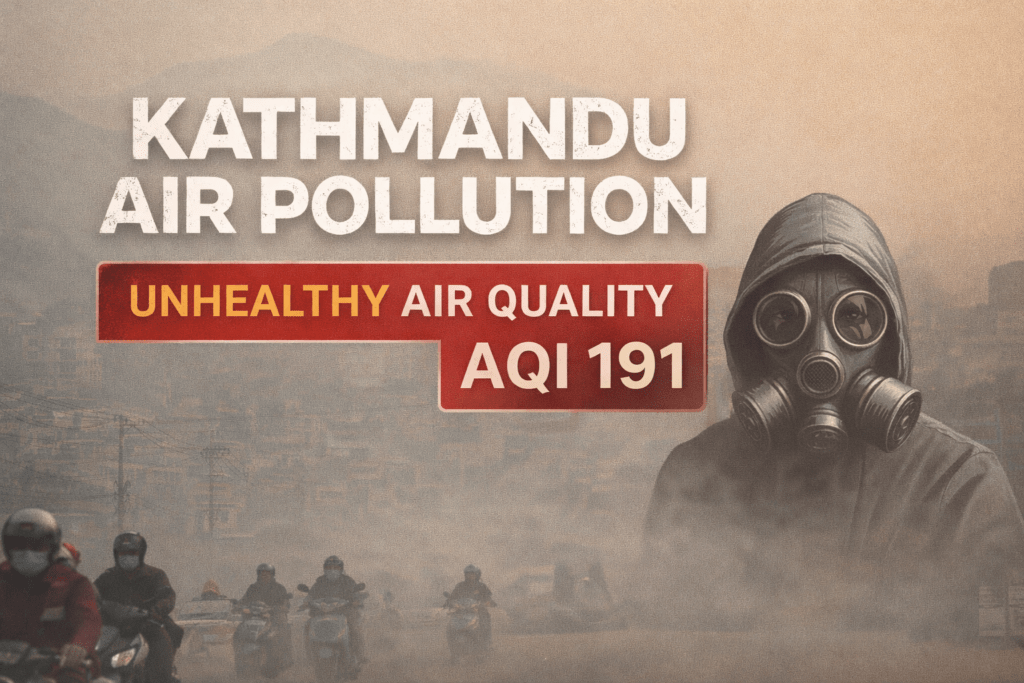

Air pollution in the Kathmandu Valley has worsened again. The Air Quality Index (AQI) rose from 178 on Monday to 191 this afternoon.
According to US Environmental Protection Agency (US-EPA) standards, this level is classified as “Unhealthy.” At this stage, everyone may feel health effects. Children, the elderly, and people with respiratory problems face higher risks.
Advertisement


Kathmandu Ranks Third Worldwide
With an AQI of 191, Kathmandu is now the third most polluted city in the world.
- New Delhi ranks first with an AQI of 229.
- Lahore stands second at 203.
- Kathmandu follows in third place.
Dry Weather Worsening Situation
Director General of the Department of Environment, Gyan Raj Subedi, said pollution may increase further if rainfall does not occur soon.
The valley has not received rain for a long time. As a result, dust and pollutants remain trapped in the air.
He urged authorities and stakeholders to adopt sustainable and eco-friendly measures to reduce pollution levels.
Main Causes of Rising Pollution
Environmental expert Barsha Parajuli listed several reasons behind the worsening air quality:
- Rapid growth in the number of vehicles
- Emissions from petrol and diesel engines
- Dust from road expansion and construction work
- Forest fires
- Prolonged drought
She warned that delays in action could make the problem harder to control.

What the AQI Levels Mean
The AQI scale ranges from 0 to 500:
- 0–50: Good
- 51–100: Moderate
- 101–150: Unhealthy for sensitive groups
- 151–200: Unhealthy
- 201–300: Very unhealthy
- Above 300: Hazardous
At the current level, health experts advise residents to limit outdoor activities. Sensitive groups should avoid prolonged exposure.
Authorities continue to monitor the situation as concerns over public health grow.