


Electric vehicle (EV) imports to Nepal fell sharply in the first half of the current fiscal year, despite strong domestic demand, due to prolonged disruptions at key northern trade points with China.
According to the Department of Customs, EV imports declined by 14.47 percent compared to the same period last year. Nepal imported 5,698 units of EVs including buses, minibuses, cars, jeeps, and vans worth Rs 14 billion during the six-month period.
Imports of conventional internal combustion engine (ICE) vehicles also dropped. The country imported 2,600 ICE vehicles worth Rs 3.89 billion, marking a 10.59 percent decline year-on-year.
Advertisement


China Border Disruptions Hit Supply
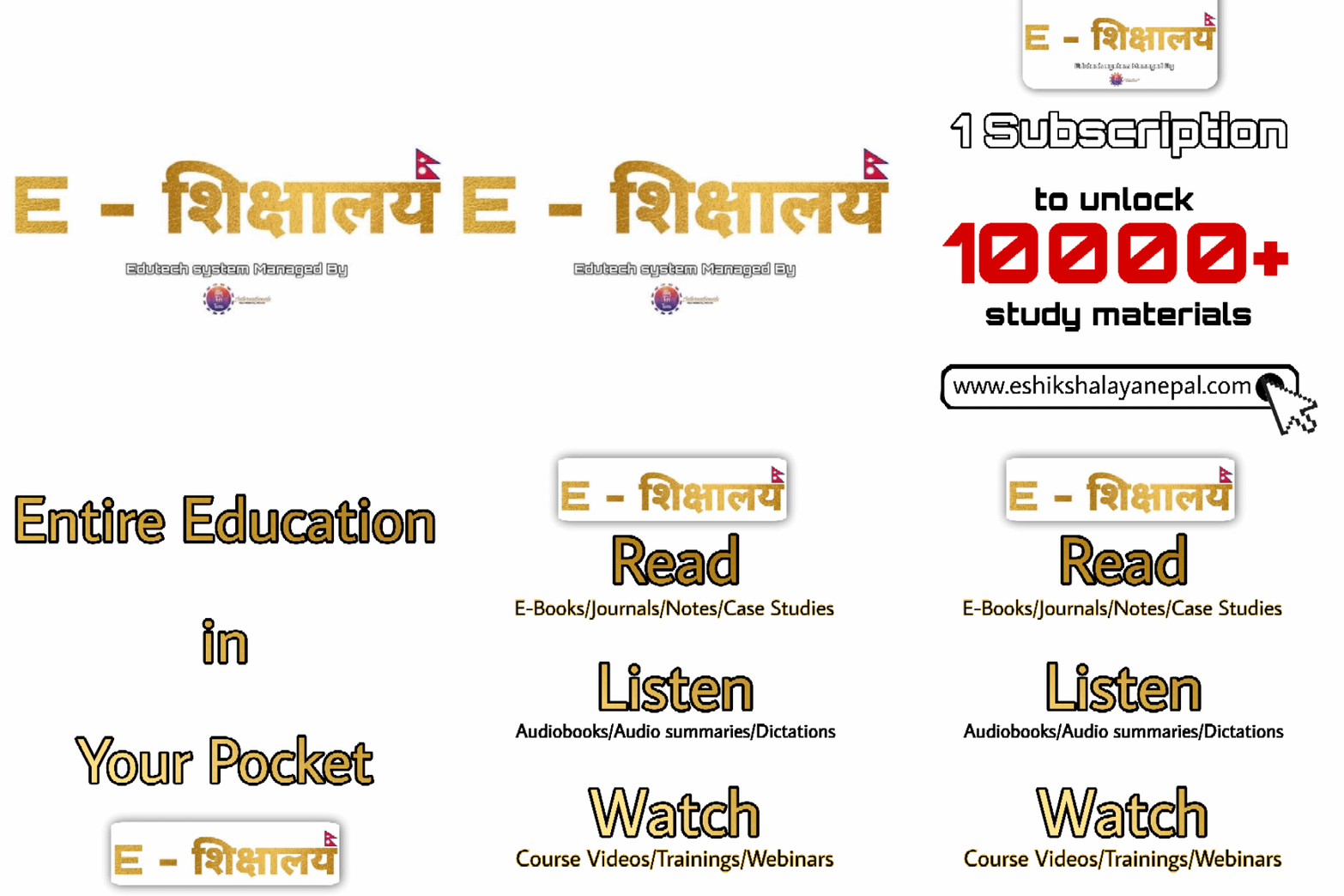
The decline has been largely attributed to prolonged closures and irregular operations at northern border points with China — Nepal’s main EV supply source.
EV imports from China alone fell by 22.64 percent, with Nepal importing 4,360 units worth Rs 10.76 billion. Additional imports came from India, Thailand, the UK, Germany, South Korea, the US, and Austria.
Imports from India stood at 913 EV units worth Rs 1.95 billion.
Supply chains were severely affected after the Miteri Bridge at Kerung was swept away by a flash flood on July 8, 2025. Although a temporary Bailey bridge was installed in January, trade operations have not returned to normal due to winter conditions and heavy snowfall along the route.
Dealers Struggle With Supply, Demand Remains Strong
EV dealers say the disruption created major supply constraints across the market.
“Almost all EV dealers faced major obstacles importing vehicles from China,” said Yamuna Shrestha, Managing Director of Cimex Inc Pvt Ltd, the authorised distributor of BYD in Nepal.
BYD shifted imports through alternative routes like Korala in Mustang, but large-scale shipments remained difficult. Many dealers had also stocked vehicles before the national budget announcement last fiscal year, reducing fresh imports in recent months.
Despite supply issues, consumer demand has remained strong.
“We imported nearly 2,000 units of Atto models within three months and almost all were sold,” Shrestha said, adding that delivery delays and limited color and model options continue due to supply shortages.

EV Market Outlook in Nepal
Industry leaders say EV adoption in Nepal is still accelerating.
Akash Golchha, Senior Vice President of the Nepal Automobiles Dealers Association, said EVs already dominate around 75 percent of the passenger vehicle market.
“For the upcoming decade, EVs could reach an 80 percent market share,” he said.
However, he noted that some consumers still prefer ICE vehicles for long-distance travel due to limited charging infrastructure in remote areas.
Trade Talks and Recovery Hopes
During the Nepal–China Coordination Mechanism on Border Trade and Cooperation held in Lhasa in January, Nepali officials raised concerns over easing trade barriers and improving border operations to ensure smoother cross-border commerce.
Traders believe that once border logistics stabilize, EV imports are expected to recover quickly, driven by Nepal’s growing shift toward clean energy transportation.