

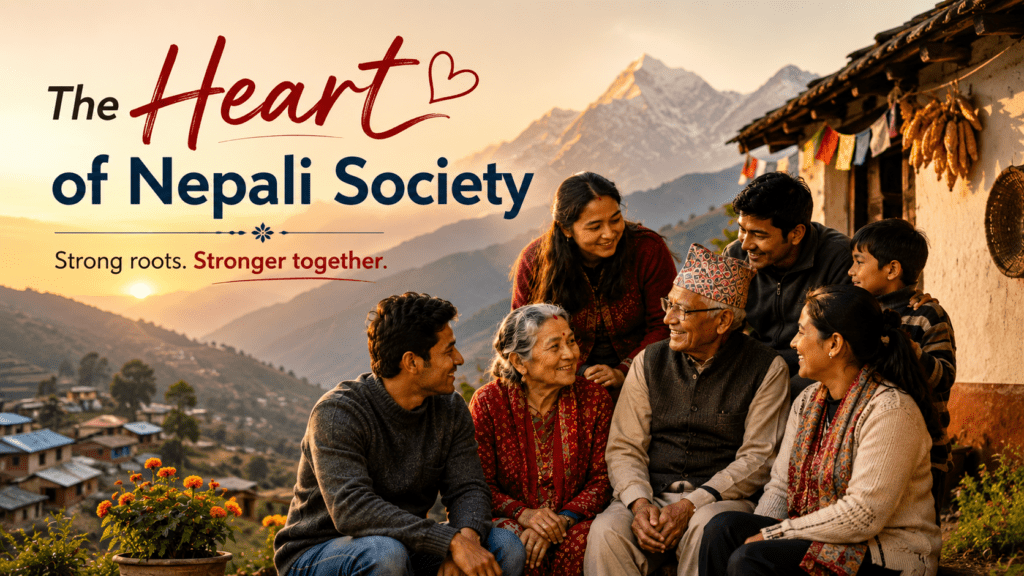

Family is at the heart of Nepali society. From childhood to old age, family members often support one another through life’s biggest challenges.
This strong family culture is one of Nepal’s greatest strengths. However, it can sometimes feel overwhelming, especially for younger generations seeking more independence.
So, what makes Nepali families so strong and why can they sometimes feel a little too involved?
Advertisement


Family Support Runs Deep
In Nepal, family is often the first source of emotional, financial, and social support.
Whether it is education, marriage, health issues, or job challenges, relatives usually step in to help.
Many Nepali households also depend on money sent by family members working abroad. Research shows that remittances play a major role in improving household welfare, education, and healthcare access.
This culture of support helps families stay connected, even when members live in different countries.
The Strength of Togetherness
One reason Nepali families remain strong is their sense of togetherness.
Common family values include:
- Respect for elders
- Shared responsibilities
- Caring for relatives in need
- Strong community ties
- Celebrating festivals together
Major festivals such as Dashain and Tihar often bring entire families together, strengthening relationships across generations.
Why Families Can Feel Overwhelming
Strong family bonds also come with expectations.
Many young people experience pressure related to:
- Education choices
- Career decisions
- Marriage timing
- Social behavior
- Family responsibilities
Parents and relatives usually offer advice with good intentions. However, constant involvement can sometimes make younger family members feel stressed or restricted.
The Impact of Migration
Nepal has seen large numbers of people move abroad for work and study.
Research shows that remittances have become an important source of income for many households and contribute significantly to family welfare.
While migration provides opportunities, it also creates challenges:
- Long-distance relationships
- Parents living apart from children
- Emotional stress
- Increased responsibilities for family members at home
Technology helps families stay connected, but physical distance can still be difficult.
Finding a Healthy Balance
Modern Nepali families are changing.
Younger generations value independence, while older generations often emphasize tradition.
A healthy balance can include:
- Open communication
- Respect for personal choices
- Maintaining family traditions
- Supporting individual goals
Families that adapt to changing times often build stronger relationships.
The Best of Both Worlds
The strength of Nepali families lies in their ability to support one another during difficult times.
At the same time, allowing space for personal growth is becoming increasingly important.
Strong families are not just about staying together. They are also about helping each other grow.

Final Thoughts
Nepali families are known for their love, support, and resilience. These qualities help people overcome challenges and stay connected across generations.
While family expectations can sometimes feel overwhelming, the strong bonds found in many Nepali households remain one of the country’s most valuable social strengths.