

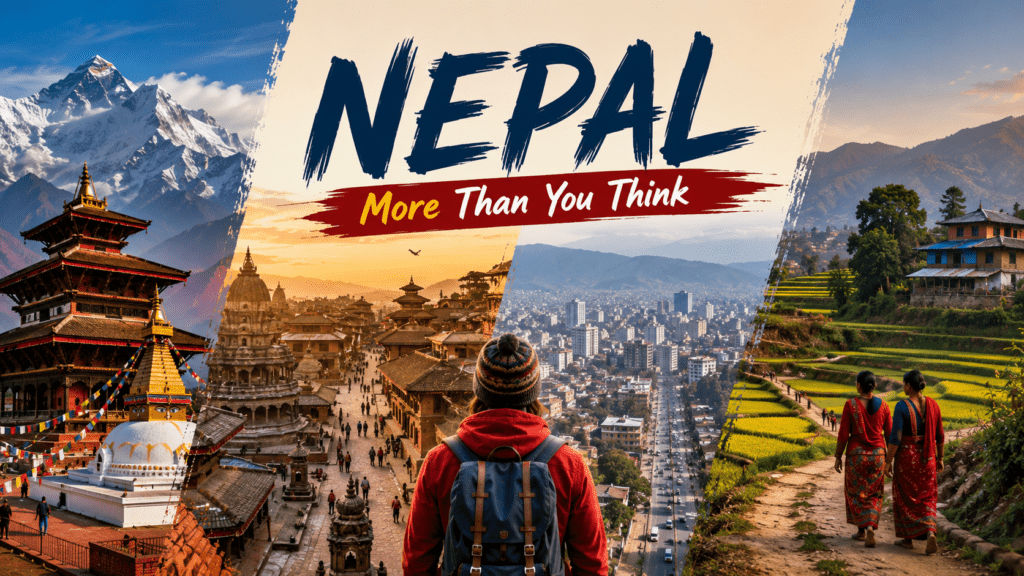

Mention Nepal to someone abroad, and you will often hear the same things: Mount Everest, trekking, and Buddhist monasteries.
While these are important parts of the country, they are only a small part of the story.
Nepal is far more diverse, modern, and complex than many foreigners realize.
Here are some of the most common misconceptions about Nepal.
Advertisement


1. Nepal Is More Than Mount Everest
Many people think Nepal is only about mountains.
Yes, Nepal is home to Mount Everest, the world’s highest peak. However, the country also has:
- Ancient cities
- National parks
- Rich cultural heritage
- Growing urban centers
- Diverse ethnic communities
In 2024, Nepal welcomed more than 1.14 million international tourists, showing that visitors are interested in much more than just mountain climbing.
2. Nepal Is Not Just a Rural Country
Foreign media often show villages and trekking routes.
While rural life remains important, Nepal is becoming increasingly urban.
Cities such as Kathmandu, Pokhara, and Bharatpur have:
- Modern businesses
- Digital payment systems
- Startups
- Universities
- Expanding infrastructure
Many visitors are surprised by how connected and technology-driven urban Nepal has become.
3. Not Everyone Lives Near the Himalayas
Another common misconception is that all Nepalis live in mountainous areas.
In reality, Nepal has three major geographical regions:
- Himal (Mountain Region)
- Pahad (Hill Region)
- Terai (Plains Region)
Millions of Nepalis live in the fertile Terai plains, which look very different from the snowy peaks often shown in travel brochures.
4. Nepal Is Culturally Diverse
Some foreigners assume Nepal has a single culture.
In fact, Nepal is one of the most culturally diverse countries in South Asia.
The country is home to:
- More than 100 ethnic groups
- Dozens of languages
- Multiple religions
- Unique regional traditions
This diversity is one of Nepal’s greatest strengths.
5. Nepalis Do Not Spend All Day Trekking
Trekking is popular, but daily life in Nepal is much like anywhere else.
People go to work, attend school, run businesses, and spend time with family.
Modern Nepal includes:
- Software developers
- Entrepreneurs
- Teachers
- Engineers
- Healthcare professionals
The country’s growing IT and digital sectors continue to create new opportunities.
6. Nepal Is Not Frozen in Time
Some visitors expect Nepal to be unchanged by modern life.
The reality is different.
Mobile banking, digital payments, online shopping, and social media are now common in many parts of the country.
Like other nations, Nepal is balancing tradition with modernization.

Why These Misconceptions Exist
Many stereotypes come from tourism advertisements and international media coverage.
Most stories focus on:
- Everest
- Trekking
- Temples
- Adventure tourism
While these attractions are important, they do not fully represent everyday life in Nepal.
Final Thoughts
Nepal’s mountains are famous around the world, but the country is much more than its peaks.
It is a nation of diverse cultures, growing cities, modern businesses, and resilient communities.
Understanding Nepal beyond the stereotypes helps visitors appreciate the country’s true identity—and the people who call it home.