


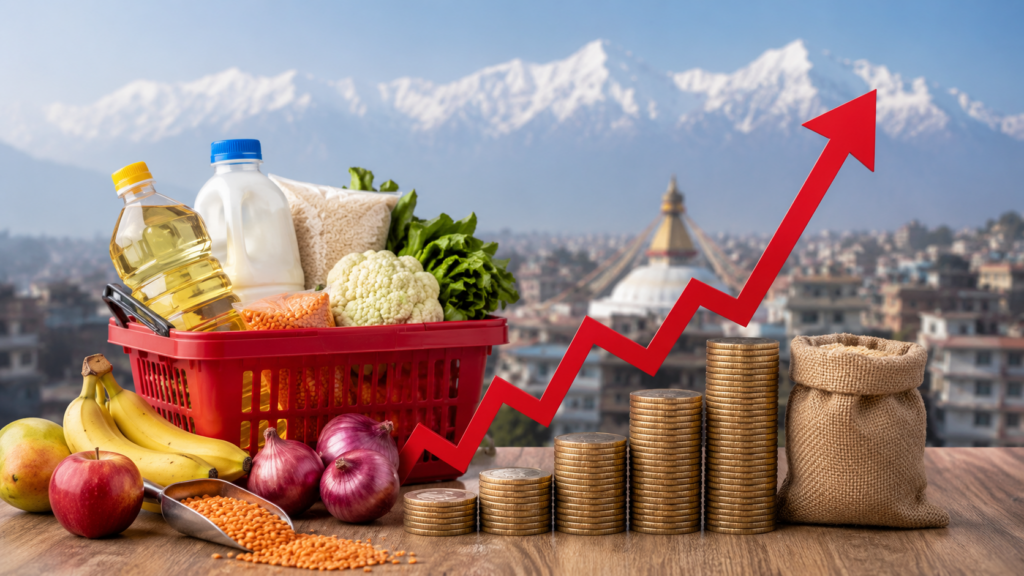

The cost of daily living in Nepal continues to rise as prices of essential goods and services increase across the country. According to recent economic data, households are spending noticeably more on food, transport, education and other everyday needs compared to last year.
Urban families have been hit harder than rural communities, with inflation remaining higher in major cities and densely populated areas.
Advertisement


🛒 Food Prices Keep Climbing
Several kitchen essentials saw major price increases in recent months.
Items with notable price hikes:
- Cooking oil and ghee
- Fruits and vegetables
- Clothing and footwear
- Transportation services
Experts say rising import costs and supply challenges continue to affect market prices.
However, some food items such as cereals, pulses and spices recorded slight price declines, offering limited relief to consumers.
🚍 Non-Food Expenses Also Rising
Inflation has not been limited to groceries alone.
Other sectors seeing price growth:
- Transportation
- Education
- Household services
- Daily consumer goods
Many families say managing monthly expenses has become increasingly difficult amid rising living costs.
📍 Which Areas Were Most Affected?
Economic reports show inflation varied across provinces, with some regions experiencing sharper price increases than others.
The Terai and major urban centres recorded higher inflation levels, while mountain regions remained comparatively less affected.

📉 Some Positive Signs
Despite recent spikes, Nepal’s average inflation for the current fiscal year remains lower than the previous year’s overall average.
Economists say stable inflation in the coming months will depend on:
- Import prices
- Fuel costs
- Agricultural production
- Market supply conditions
✅ Final Thoughts
As everyday expenses continue to rise, many Nepali households are adjusting their spending habits. Experts believe controlling inflation and improving market stability will remain crucial for protecting consumers and supporting economic confidence.