


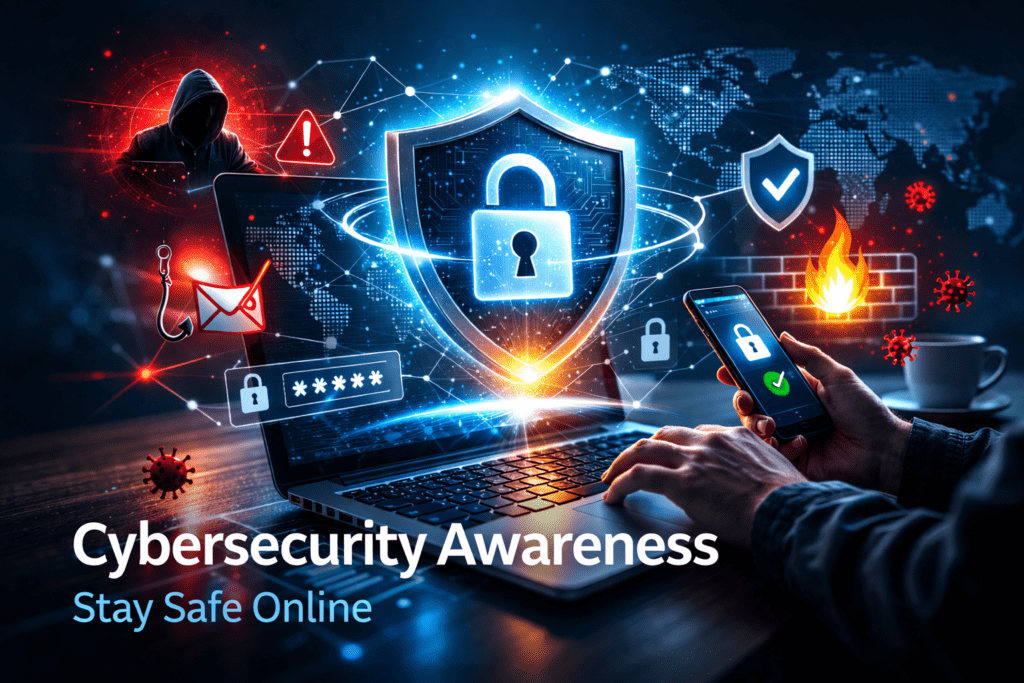

In today’s digital world, cybersecurity awareness is essential for individuals, businesses, and governments. As more activities move online, cybercriminals are finding new ways to exploit users through phishing, malware, and data breaches. Understanding cybersecurity risks can help prevent many of these attacks.
Growing Threat of Cybercrime
Cybercrime has become a major global concern. Experts estimate that cybercrime could cost the world $10.5 trillion annually by 2025, making it one of the most expensive forms of crime globally.
Cyberattacks are also becoming more frequent. In 2024, organizations experienced an average of 1,876 cyberattacks per week, showing a significant rise compared to previous years.
These numbers highlight why cybersecurity awareness is crucial in protecting sensitive data and digital systems.
Advertisement



Human Error: The Biggest Cybersecurity Risk
One of the surprising facts about cybersecurity is that most attacks succeed because of human mistakes.
Research shows that around 68% of cyber breaches involve human error, such as weak passwords, clicking malicious links, or sharing sensitive information online.
In addition, studies suggest that up to 95% of cybersecurity breaches are linked to human factors, emphasizing the importance of awareness and training.
Phishing emails remain a common tactic used by hackers. Reports indicate that millions of phishing emails are sent daily, tricking users into revealing personal information or installing malware.
Why Cybersecurity Awareness Is Important
Cybersecurity awareness helps people recognize potential threats and respond safely. When users understand how cyberattacks work, they are less likely to fall victim to scams.
Organizations that provide cybersecurity training can reduce phishing click rates by up to 75%, showing the strong impact of awareness programs.
Awareness also helps individuals protect personal information such as banking details, passwords, and private data.
Simple Ways to Improve Cybersecurity
Everyone can take simple steps to improve cybersecurity:
- Use strong and unique passwords
- Enable two-factor authentication (2FA)
- Avoid clicking suspicious email links
- Keep software and devices updated
- Be cautious when sharing personal information online
These basic habits can greatly reduce the risk of cyberattacks.

Conclusion
Cybersecurity is no longer just a technical issue. It is a shared responsibility. With cyber threats increasing worldwide, awareness and education are key to protecting digital systems and personal data. By staying informed and practicing safe online behavior, individuals and organizations can build a safer digital environment.