


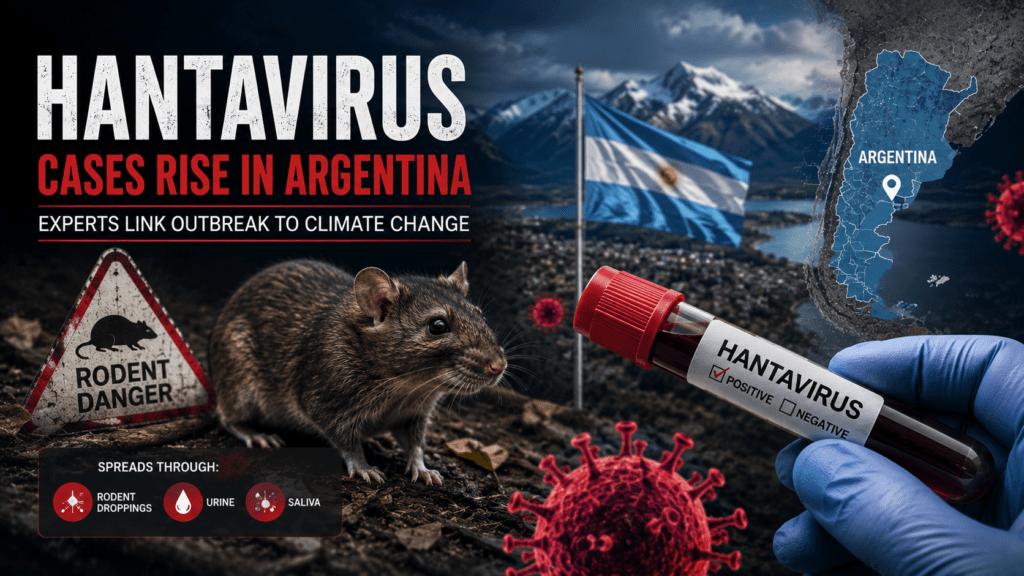

Argentina is facing growing concern over a rise in hantavirus infections as health officials investigate several recent cases linked to international travelers. Experts say changing weather patterns and environmental shifts may be contributing to the spread of the rodent-borne disease.
Advertisement


🌡️ Cases Continue to Increase
According to health authorities, hantavirus infections have increased significantly compared to previous years. The disease, mainly spread through contact with infected rodent waste, can cause serious respiratory illness in humans.
Medical experts warn that warmer temperatures and changing ecosystems are helping rodents survive in more areas, increasing the risk of transmission.
🐭 How the Virus Spreads
Hantavirus is commonly transmitted when people inhale particles contaminated by rodent urine, saliva, or droppings. Symptoms may begin like the flu but can quickly become severe.
Common symptoms include:
- Fever and chills
- Muscle pain
- Breathing difficulties
- Fatigue
Health officials advise people to avoid areas with rodent activity and maintain proper hygiene during outdoor travel or camping.
🌍 Climate Change Concerns
Researchers believe climate change is playing a major role in the outbreak. Increased rainfall and shifting temperatures create better conditions for rodents to reproduce and expand into new regions.
Experts say this environmental imbalance is also contributing to the spread of other infectious diseases across South America.

⚠️ Authorities Urge Precaution
Public health agencies are continuing investigations while encouraging travelers and local residents to remain cautious. Medical teams are also increasing monitoring efforts in areas considered high-risk.
Officials stress that early treatment and awareness remain key to reducing serious complications from the virus.
✅ Conclusion
The recent rise in hantavirus cases highlights the growing connection between climate change and public health. As experts continue their investigations, authorities are urging the public to stay informed and take preventive measures seriously.