

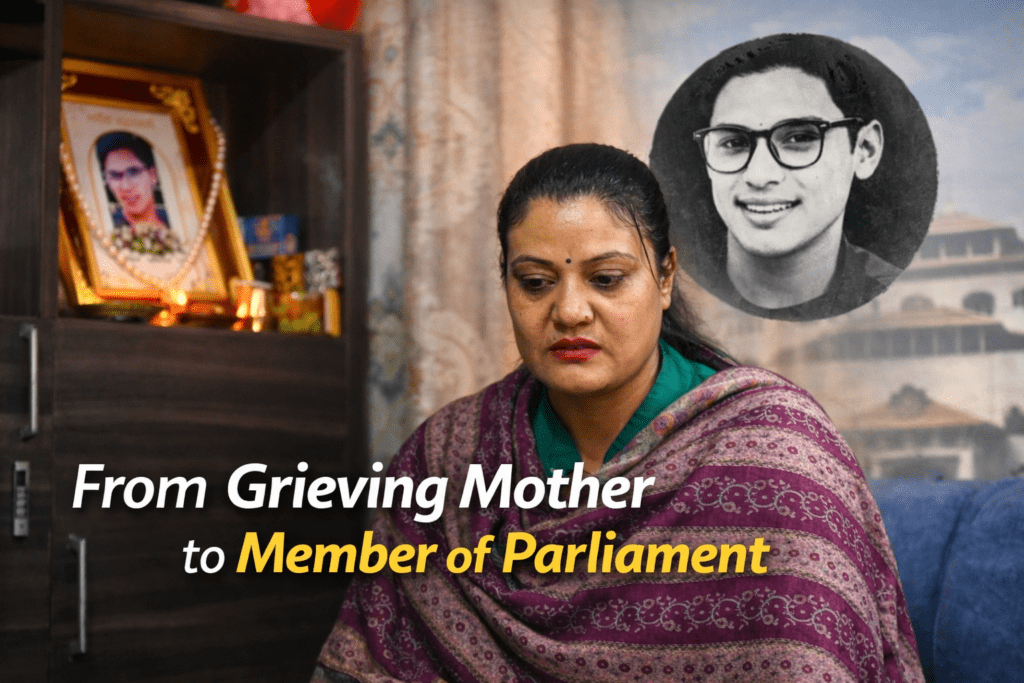

Rachana Khatiwada, the mother of a young protester who died during the September 8 Gen Z movement, has been included in the Proportional Representation (PR) list for the House of Representatives from the Rastriya Swatantra Party.
Her name appeared on the list on Sunday. While relatives and friends sent messages of congratulations, Rachana says the moment brings mixed emotions.
“I cannot feel happy,” she says. “No matter where I reach, my son will not return.”
Advertisement


A Mother Carrying a Heavy Responsibility
Rachana’s 23-year-old son Rasik Khatiwada was killed during the protest in Baneshwar last year. Since then, she has been demanding justice for him and others who died during the movement.
Now, she says her new role as a lawmaker comes with responsibility.
- She is the only representative from the families of victims in Parliament.
- She hopes to raise the issue of justice inside the House.
- She wants the government to address the concerns of affected families.
“Now I will have the chance to speak in Parliament,” she says.
From Homemaker to Political Voice
Before the incident, Rachana lived a simple life. She was a homemaker who had little interest in politics.
For more than 20 years, she and her husband ran a small grocery shop in Kavre. The income helped support their two children:
- Rasila, who was living in Australia
- Rasik, who was preparing to join his sister abroad
Life changed suddenly after the protest that took Rasik’s life.
The Day Everything Changed
On the day of the protest, Rasik left home after starting his meal. He told his mother he would return soon.
Rachana waited the entire day.
But the son who had promised to come back and make tea for his mother never returned home.
Later, the family learned that Rasik had died during the protest.
Continuing the Fight for Justice
Since that day, Rachana has been actively demanding justice.
She has organized and joined protests at important government locations, including:
- Singha Durbar
- Baluwatar
According to her, the families had submitted a 14-point demand to the government, but key issues were not addressed.
“Our voices were ignored,” she says.
A Visa That Came Too Late
Rasik had been waiting for his Australian visa before the protest.
Tragically, the visa arrived after his death.
Every morning, his father Purushottam Khatiwada lights a lamp beside his son’s framed photograph. The family continues to remember him daily.

Support From Political Leaders
Rachana’s story reached the leadership of the Rastriya Swatantra Party.
Party chair Rabi Lamichhane visited families affected by the protest and met Rachana.
After hearing her story, the party later decided to include her name on its PR candidate list under the Khas-Arya women category.
A Voice for Many Families
Rachana says her role is no longer only about her son. She now wants to represent many families who lost loved ones during the protest.
“There are still people walking with bullets in their bodies,” she says.
“There are many mothers like me. Their voices must also be heard in Parliament.”